|
Geography
The
Cook Island are located in the South Pacific,
about 1875 miles (3015 km) north east of Auckland.
The Cooks' nearest neighbours are Tahiti to
the east and American Samoa to the west, each
roughly 1500km (930 miles) away. The Cook Islands
are spread across some 2 million square km (
772,200 sq mi) of sea, an aera as large as Western
Europe.
Aitutaki
ranks behind Rarotonga in the visitor contest,
and it lacks the sheer physical beauty of its
larger neighbour, but it has charms all its
own. For a start, it sits at one corner of a
triangular lagoon dotted with lovely motu (small
islands). And it's historically interesting,
with a number of impressive marae (pre-European
religious meeting grounds) that are open to
visitors. Aitutaki also has one of the best
'island nights' dance and music performances
in the Cooks.
The
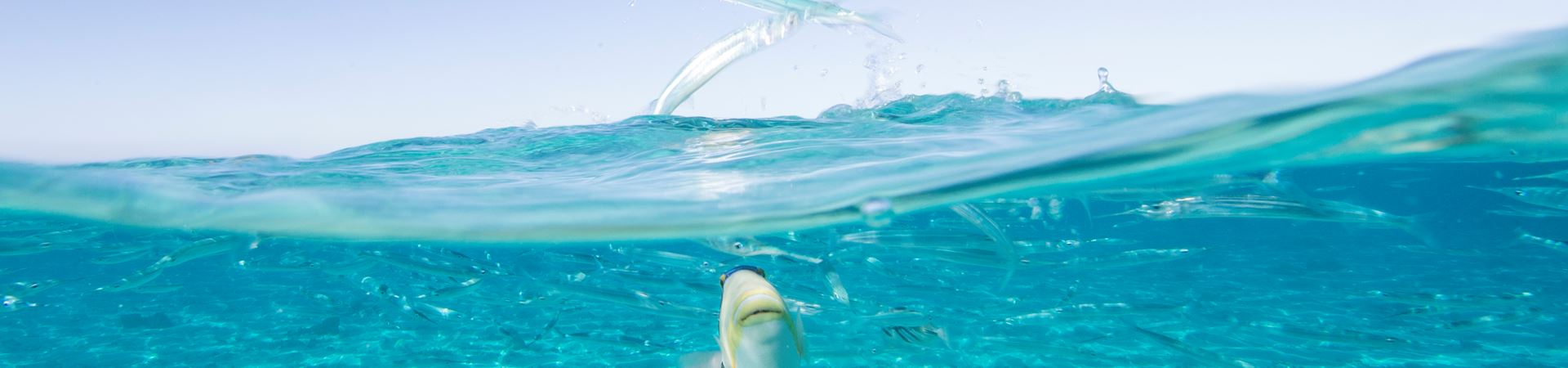
Turquoise clear lagoon is dotted with coral
heads and boasts wonderful snorkeling on the
reef areas.
History
:
There
is much conjecture regarding where the original
settler came from, however it is believed that
the first settlers came during the Great Polynesian
Migration in around 800 AD. In the 11th century
a chief named Toi built the first coral road
in Rarotonga, lying
|
Two
centuries later the great chiefs Tangiia
Nui from Tahiti and Karika from Samoa
met and joined forces at sea to conquer
the earlier inhabitants. The Spanish explorers
Alvaro de Mendana sighted Pukapuka on
August 20th 1595 and Pedro Fernandez de
Quiros sighted Rakahanga on March 2nd
1606.
There
was no further European contact until
over 160 years later when Captain James
Cook, for whom the group was eventually
named, sighted Manuae atoll (Hervey Island)
in 1773. On a later voyage, he also discovered
Palmerston, Takutea, Mangaia and Atiu
(1777). The ill fated Captain William
Bligh sighted Aitutaki in 1789 and mutineer
Fletcherinland, called the Ara Metua.
|

James
Cook
|
Cook
Islanders Maori is the local language but everyone
also speaks English. Commerce is conducted in
English.
Population
:
The
Cook Islanders are Polynesians. Over 90% of
the population is polynesian, with small minorities
of Europeans and Chinese.
The
local tongue is Cook Islands Maori, closely
related to New Zealand Maori and to the Polynesian
languages of Tahiti and Hawaii, though English
is spoken as a second language by virtually
everyone
The people in the Cook Islands are open and
naturally friendly. Their hospitality is warm
and spontaneous, the dancing exuberant and the
mood relaxed. Cook Islanders share a genuine
concern for others and their old culture lives
on through song, dance, legends and an easy
pace to life reflecting the nature of the islands
in which they live The current population in
the Cook Islands is estimated at 17,000 people,
with around 9,000 living on the main island
of Rarotonga.
Cook Islanders retain
much of their culture and this is passed
down from generation to generation.
There are restored sites, marae's and
also our museum to see. Other culture
is kept alive with dance and song and
these can be seen at the Cultural Village
or at the special Island Nights at the
main hotels. There are very good displays
also at constitutional celebrations
and with our Dancer of The Year competitions
and also Tiare Week.
|
|
Various
denominations are found in the Cook Islands
with the main religions being Congregational
Christian Church and Catholic.
Climate
:
The climate here is particularly comfortable
and warm. June to August are the cooler months,
whilst November to March is normally the wet
season with tropical showers and higher humidity.
With the changes in climate as they have been
for the last two years, we have also seen unseasonal
weather however you can be assured of rain and
a good proportion of sunshine (see chart below).

Temperature :
| TEMPERATURE
(°C) |
| |
Maximun |
Minimum |
| JAN
|
28.8
|
22.9
|
| FEB |
29.1 |
23.1 |
| MAR |
28.9 |
22.6
|
| APR |
28.2 |
22.0 |
| MAY |
26.6 |
20.4 |
| JUN |
25.6 |
19.3 |
| JUL
|
25.2 |
18.6
|
| AUG |
24.9 |
18.4 |
| SEP
|
25.3
|
19.1
|
| OCT |
26.0 |
20.0 |
| NOV |
27.1
|
21.0 |
| DEC |
27.8 |
21.9 |
|